About
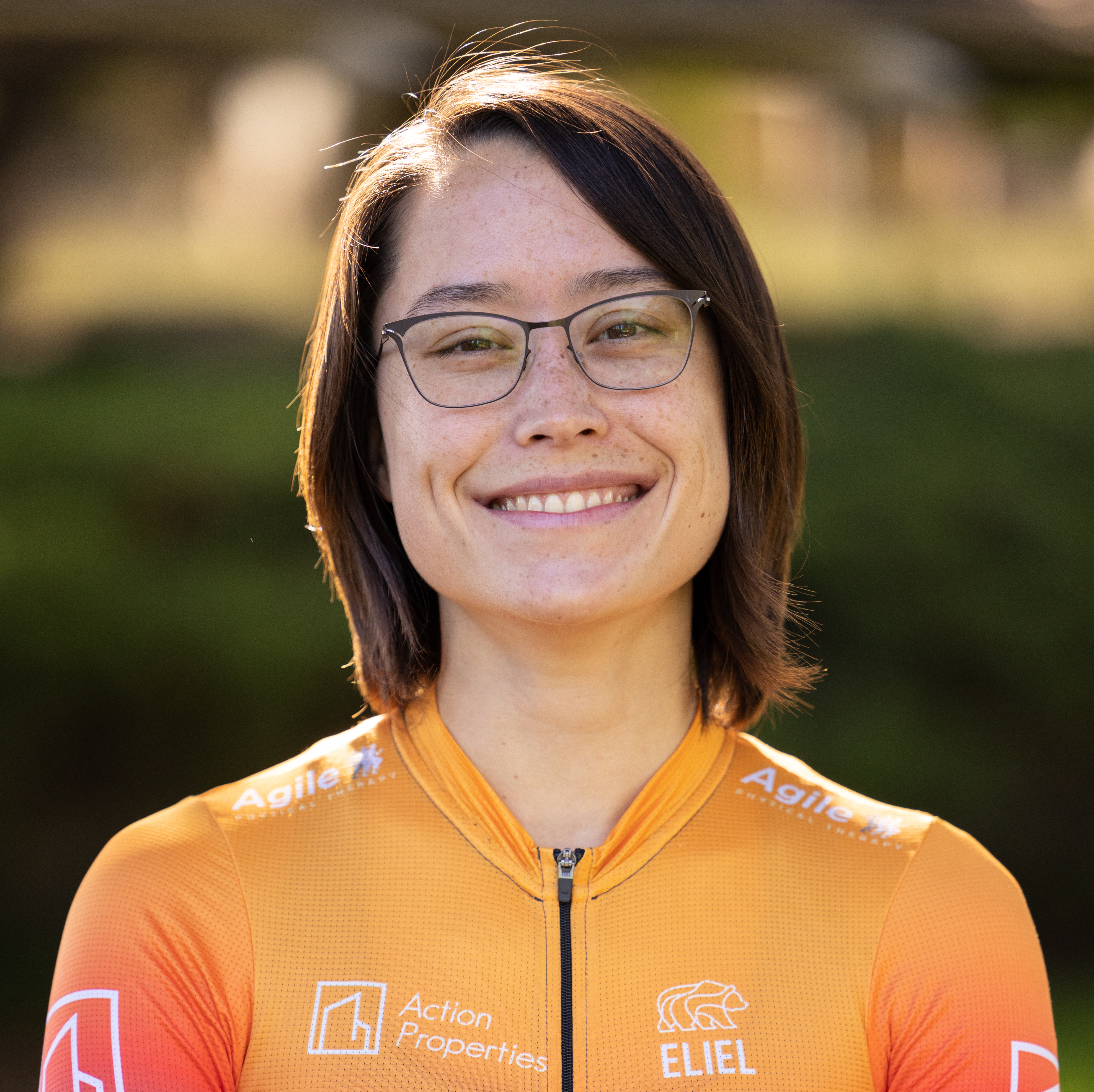
A stubborn belief that healthcare shouldn't be limited by geography or resources.
My path through science has been driven by that belief. From early days in Germany investigating neuroprosthetic electrodes as a Fulbright Scholar, to engineering DNA storage systems at UW, to building diagnostic tools at Stanford, I've been drawn to problems where the intersection of computation and biology can make medicine more accessible. Now at b.next, I'm working to create the computational infrastructure that makes synthetic biology reproducible, scalable, and ultimately useful for discovery.
With a background spanning protein science, multi-omic assay development, and mathematical modeling, my work is about translating complex biological data into actionable insights. I'm motivated by finding creative ways to solve problems — whether it's designing algorithms that better travel the experimental fitness landscape, or baking the perfect buttery layers of puff pastry (which also requires a fair amount of optimization).
If you're working on something exciting in the healthcare space, I'd love to connect and explore how we can collaborate.
Experience
Where I've worked

- Fine-tuned and modified ML models on large-scale multi-modal biological datasets to push the Pareto frontier of antibody developability.
- Applied statistics and protein-based insights to enhance model architecture, feature engineering, and variant ranking.
- Developed QC methods and benchmarks to ensure reproducibility and scalability of ML pipelines.

- Developed a convex optimization framework and biophysics model for accurate, quantitative use of cross-reactive affinity reagents (theory: Anal. Chem.; assay: ACS Omega).
- Built a user-friendly API to automate OT-2 liquid-handling workflows, streamlining wet-lab processes and improving reproducibility.
My thesis investigated bottlenecks in molecular quantification to advance the robustness and scalability of diagnostic assays. Particularly, many current solutions assume that the intrinsic affinity between the affinity reagent and the target are the limiting factor, or view background signal and noise as an annoying feature. Works between my collaborators and I take advantage of these aspects to provide more robust and scalable molecular quantification techniques including:
- Matured a biophysical model and tuning mechanism for multiplexed assays, achieving 7+ orders of dynamic range in 100% serum (Nature Comm., patent).
- Built image segmentation and spatial autocorrelation algorithms for spatiotemporal monitoring of cellular molecular signaling (Adv. Mater.)
- Build cloud-based memory-efficient pipelines and statistical algorithms for large-scale single-molecule imaging (Nature Comm.).
- Developed a multiplexed DNA-based assay and custom NGS pipeline for scalable small-molecule quantification (ACS Omega).
Developed statistical and computational methods that surfaced the role of unmonitored data signal in antibody developability, integrated it into the company-wide data pipeline, and proposed in-silico antibody designs with expected improvements in target characteristics.

Spearheaded a wet-lab automation device (PurpleDrop) for DNA data storage and established a lab branch focused on digital microfluidics (Nature Comm.) More on the work lives on the MISL webpage. News Article.

Stress mitigation in thin film electrodes for neuroprosthetics (IEEE NER). News article on proposed work and follow up describing Fulbright experience.
Automated a surgical robot for sensory-feedback mapping in targeted muscle reinnervation, and developed 3D-printed tissue models for auricular reconstruction surgical training with Seattle Children's Hospital (publication, news).
Built on a sensory-motor fusion system to estimate human intention for control of a lower-extremity exoskeleton, integrating ODE/PDE models of central pattern generators in MATLAB and redesigning the user interface.
Toolkit
Skills
Teaching
In the classroom
ML & AI in Healthcare
Designed and taught a project-based AI curriculum for high schoolers, progressing from linear regression to CNNs, with advanced healthcare-focused modules on GNNs, saliency maps, and ethics.
BIOC 241 — Biological Macromolecules
Reshaped the course for online learning — flipped classroom and synchronous sections covering folding thermodynamics, enzyme kinetics, and bistable systems via fixed-point analysis.
BIOE 101/201 — Systems Biology
Led recitations spanning fixed-point analysis, stochastic simulation, signal transduction, and metabolism; designed and graded homework and exams for 50 students.
EE 235 — Analytical Methods in Biotech
Revamped curriculum and led lab modules on restriction enzymes, immunoassays, bacterial transformation, and sequencing, with mini-lectures on DNA/protein structure and Nanopore sequencing.
Recognition
Honors & awards
- Stanford Graduate Fellowship (SGF)2017–2022
- NSF Graduate Research Fellowship (GRFP)2019–2022
- Best Poster — GRC Bioanalytical Sensors2022
- Whitaker International Fellow2015–2016
- U.S. Student Fulbright Scholar2015–2016
Publications & patents
Selected work
For the most up-to-date catalog, see my ORCiD. (* equal contribution)
- Newman S.S.*, Hein L.A.*, et al. Theoretical framework and experimental validation of multiplexed analyte quantification using cross-reactive affinity reagents. Anal. Chem. 97, 18896–18906 (2025).
- Newman S.S., Wilson B., Zheng L., Soh H.T. Multiplexed assay for small-molecule quantification via photo-cross-linking of structure-switching aptamers. ACS Omega 9, 43785–43792 (2024).
- Newman S.S. Re-imagining and expanding the diagnostic toolbox: toward robust and scalable molecular quantification. Stanford University, ProQuest Dissertations & Theses (2023).
- Park C.H., Thompson I.A.P., Newman S.S., et al. Real-time spatiotemporal measurement of extracellular signaling molecules using an aptamer-switch-conjugated hydrogel matrix. Advanced Materials 2306704 (2023).
- Newman S.S.*, Wilson B.*, Mamerow D.*, et al. Extending the dynamic range of biomarker quantification through molecular equalization. Nature Communications 14, 4192 (2023).
- Soh H.*, Wilson B.*, Newman S.S.*, Mamerow D.*. A tunable proximity assay that can overcome dilutional non-linearity. PCT Patent App. PCT/US2023/062463.
- Hariri A.A.*, Newman S.S.*, Tan S.*, et al. Improved immunoassay sensitivity and specificity using single-molecule colocalization. Nature Communications 13, 5359 (2022).
- Stephenson A., Willsey M., McBride J., Newman S.S., et al. PurpleDrop: a digital-microfluidics platform for hybrid molecular-electronics applications. IEEE Micro 40(5), 76–86 (2020).
- Newman S.S., Stephenson A., Willsey M., et al. High-density DNA data storage library via dehydration with digital-microfluidics retrieval. Nature Communications 10, 1706 (2019).
- Willsey M., Stephenson A., Takahashi C., …, Newman S.S., et al. Puddle: a dynamic, error-correcting, full-stack microfluidics platform. ASPLOS '19 183–197 (2019).
- Organick L., Ang S., Chen Y., …, Newman S., et al. Random access in large-scale DNA data storage. Nature Biotechnology 36, 242–248 (2018).
- Berens A., Newman S., Bhrany A., et al. Computer-aided design and 3D printing to produce a costal cartilage model for simulation of auricular reconstruction. Otolaryngology–Head & Neck Surgery 155, 356–359 (2016).
Selected talks & posters
Presentations
- Newman S.S., Hein L. “Multiplexed analyte quantification with cross-reactive affinity reagents.” DNA29, Japan (2023).
- Newman S.S. “Extending the dynamic range of biomarker quantification through molecular equalization.” IEEE MNMC, Hawaii (2022).
- Newman S.S., et al. “Tuning mechanisms for simultaneous quantification of fM and high-nM proteins.” Gordon Research Conference, Bioanalytical Sensors (2022). ★ Best Poster
- Newman S., Chen R., Noyola T. “Prediction of partially structured DNA aptamer libraries.” Stanford CS221 (2019).
- Newman S., Persson T. “White blood cell differential counting in blood smears via Tiny YOLO.” Stanford CS230 (2018).